
Validation of bacterial retention - thought about filter integrity test parameters?
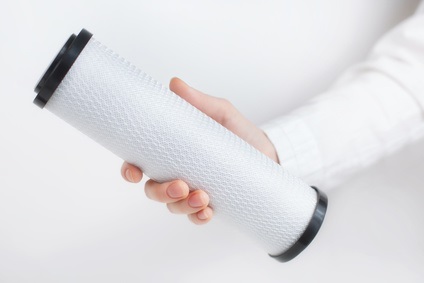
In this blog article the influence of filter integrity test parameters on bacterial retention will be discussed.
Sterile filters can be used during the manufacture of parenteralia for example. If the product is a protein solution two filtration steps are required for aseptic preparation. First a bioburden reduction filtration and directly before filling a sterile filtration.
Product-Specific Validation of Bacterial Retention
Among others, sterile filters’ ability to retain bacteria must be validated (applying the bacterial retention test according to ASTM F838-20). This happens in two ways. First, the filter manufacturer checks its filters for bacterial retention. For this test, an aqueous medium suitable for the bacteria is used. But the second step is crucial: the filter user, this is the pharmaceutical company, must also test the filter with the product solution for which the filter is to be used. This is to ensure that the product solution itself has no negative impact on the bacterial retention capability of the filter. Such product-specific validation of bacterial retention should take place under worst-case production conditions. If, during production, the usual filtration pressure is about 1 bar, this pressure, if necessary, slightly increased, is also used for validation.
Filter Integrity Testing: Procedure and PUPSIT
During drug production the filter is tested for integrity. Different tests can be used (e.b. bubble point test, forward flow or pressure hold decay test; refer to our article about Filter Integrity Tests). According to the requirements of Annex 1 of the EU GMP Guideline, filter integrity must be tested both before and after use of the filter. The use of the filter, that is the filtration of the product, should be done immediately before filling. Testing the filter’s integrity before filling should ensure that only proper filters are used and testing after filling serves to prove that the filter has not been damaged during the filling process. According to the 2022 update annex 1 of the EU GMP guidelines, paragraph 8.87, the test before filling must be performed as PUPSIT (pre-use - post-sterilization integrity testing). Therefore, the filter has already been inserted into its filter housing and sterilized. To wet the filter, either water or some product solution can be used. When using product solution, the filling is shortly started (and quickly stopped) so that the filter is just wetted. Some product solution is getting into the dosing tank of the filling plant, but no vials or syringes are filled yet. If the filter’s integrity is determined using a bubble point test, the applied pressure is significantly higher than the pressure used to transfer the product solution from the storage vessel to the filling machine.
To talk about validation, it is important that the bacterial retention capacity of the filter is not only tested applying the usual process pressure, but also by applying the increased pressure seen in the bubble point test for a time necessary to execute the bubble point test.
Risk Assessment and Conclusion
If this is not the case, the risk would be conceivable that bacteria which might still be present in the product solution after bioburden reduction filtration (e.g. due to a filter defect), might pass the sterile filter and get into the product due to the increased pressure. Although it can be argued that this risk is extremely low, as e.g. (where applicable)
- the first filled vials / syringes are always discarded due to regulation of the filling weight
- the internally observed bacteria are larger than the bacteria used in the bacteria retention test (Brevundimonas diminuta)
- historical IPC (in-process control) data demonstrate that after bioburden reduction filtration generally no germ is found or only in 0.x% of all cases
- an extrapolation with the bioburden limit of the bioburden reduction filtration and the batch volume results in a number of bacteria that is some potencies lower than the number of bacteria used for the bacteria retention test; especially when you realize that not the whole volume of the batch but only the volume of the wetted filter is exposed to the increased pressure
a correctly implemented validation study considering these aspects is clearly recommended.